Thursday, September 12, 2013

Making babies fat!


Malnutrition is a reality for 50% of infants and children in Lesotho.  Malnutrition is a broad term that encompasses both quantity and quality of food consumed.  Malnutrition can be chronic or acute and can result in growth failure, macronutrient and micronutrient deficiencies.  If left untreated, the effects of malnutrition can be irreversible.   

Around Mokhotlong camptown, TTL is known as the organization that, ‘makes babies fat.’  We are proud of our reputation and happy to see the infants and children in our care flourish.  Infants and children that are supported in the safe home spend, on average, four months receiving intensive nutritional, medical, emotional and developmental support – but we’d like to see that length of stay reduced.  Recently, we reviewed and changed the safe home diet to make it more nutritionally complete while still utilizing locally available foods and adhering to cultural preferences.  We have increased the amount of healthy fat in the diet, added more fresh fruits and vegetables, increased the amount of animal protein and created age-specific dietary plans.  Although there is nothing quite like walking into a safe home full of thriving infants and children, we are hopeful that these changes will result in a more timely reunification process.  We look forward to monitoring and evaluating these changes and hope to enjoy the fruits of our efforts!
'Me Manthati providing a little taste testing along the way
'Me Maliphoofolo scooping some avocado to add to the mashed potatoes


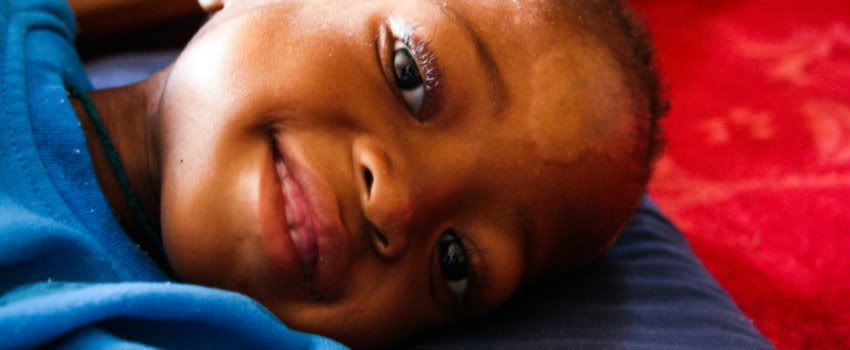
Lehlohonolo, affectionately nicknamed Ntate Makoenya for his chubby cheeks, likes the new diet!                            

Friday, August 23, 2013

How environmental sustainability projects promote TTL's long-term sustainability


Solar water heaters and new gutters for roof water catchment
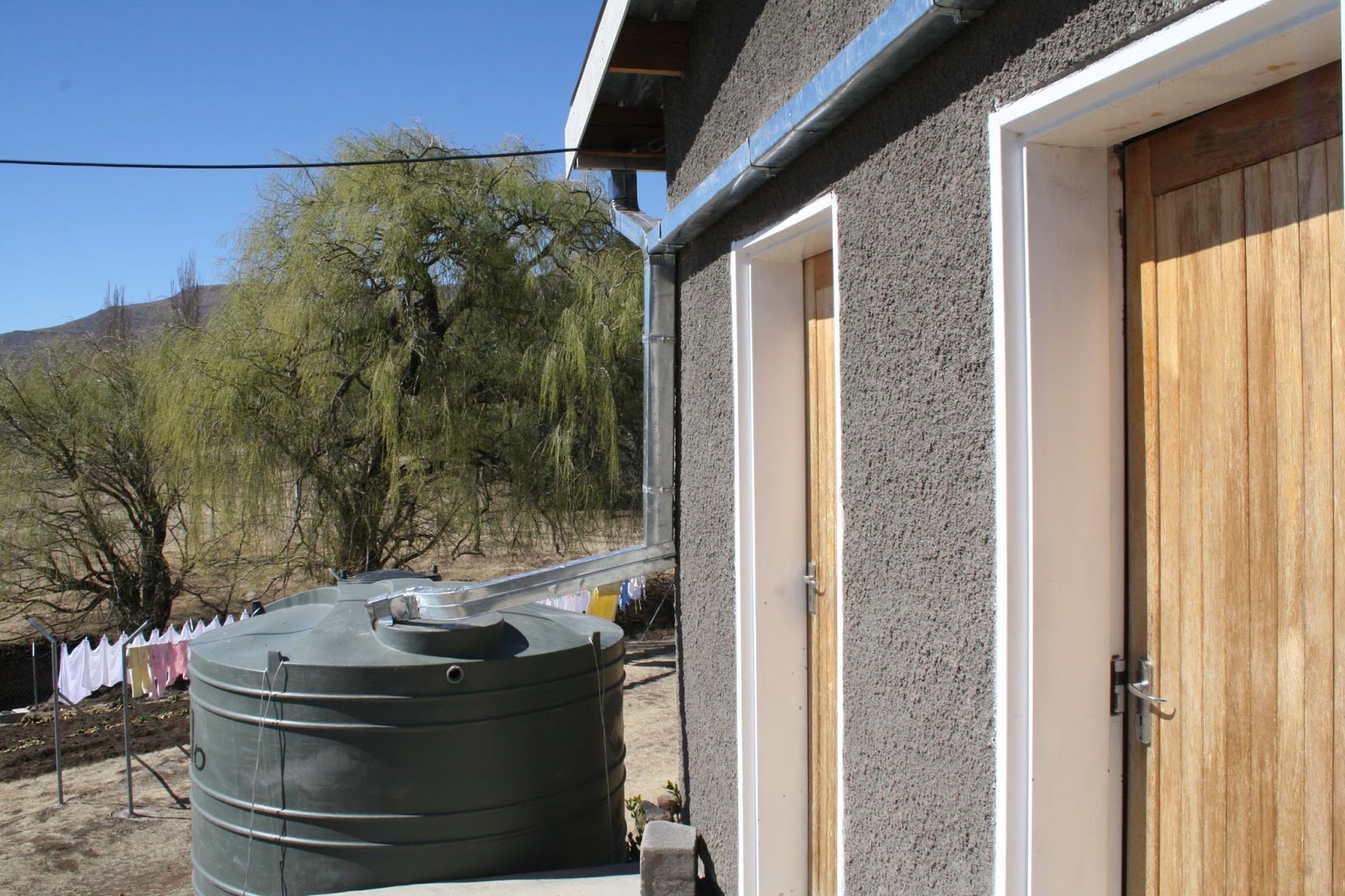
New Gutters directing water to tank 1


Over the past couple of years, the Town of Gummersbach, Germany (and more specifically die Aktionsgruppe Gummersbach der Welthungerhilfe /Initiative für Kinder in Lesotho) has helped Touching Tiny Lives (TTL) become more “green.” They have supported several environmentally friendly sustainability projects, including a solar electric system for the safe-home, three solar water heaters (geysers), and recently a roof water catchment and storage system.


The new roof water catchment and storage system was finished this week and is comprised of gutters on two buildings directing water to two 5000 liter (about 1300 gallons) storage tanks. The water captured from the roof will be used to wash TTL vehicles and water TTL’s expansive vegetable garden and plants. Not only do the gutters help direct the water to the storage tanks, but they also have the added benefit of preventing soil erosion around the buildings’ foundations. 


Why are “green” or environmentally friendly projects so important to TTL?   
  • The first, and perhaps most obvious reason, is that TTL is being a responsible local organization by using less of the Lesotho’s limited resources. 
  • The second reason is these projects promote TTL’s long term financial sustainability and ultimately help save baby’s lives.   This is a bold statement, but here is the bottom line: by reducing overhead costs such as water, heat, and electricity, the more TTL can spend directly on resources to save the lives of beautiful Basotho babies.

'M'e Mamosa, Outreach staff

TTL takes pride in how donor money is utilized and the creative ways we save and earn money. Double sided printing, selling vegetables from our garden, using food from our garden in the safe home, and having guest housing available for rent are all ways to put money towards where it belongs: on resources that save children’s lives - like medical supplies, food, and caregiver education.


We appreciate Gummersbach for helping with our “green” projects – because we know, ultimately, the savings realized goes directly towards saving lives, one child at a time.  Vielen Dank to Gummersbach!


Gutters directing water to tank 1


Ntate Tumisang, Gardener 

Bring on the Rain!   


Tuesday, August 13, 2013

Check Out This Video and the Work You Make Possible

Touching Tiny Lives and Touching Tiny Lives Foundation would not be where we are today if it wasn’t for your generous support.  We, along with the children and families of Lesotho, thank you.  We hope you enjoy this montage of happy faces that you helped to create!  Rea leboha!


Thank you! from TTLF on Vimeo.

Monday, August 5, 2013

Healthcare and Human Rights


According to the World Health Organization (WHO) Constitution:  “the enjoyment of the highest attainable standard of health is one of the fundamental rights of every human being…”.  Yet here in Lesotho, and other developing regions of the world, this right is infringed upon almost daily, both directly and indirectly.  Treatment decisions are frequently based on prudent use of limited supplies, rather than the best interest of the patient.  Health clinics in the rural areas are few and far between and provide only very basic services.  Hospitals are found only in district capitals and, especially here in the Eastern Highlands where TTL is based, are a multi-day journey for many.  For those fortunate enough to reach a hospital in a timely manner, treatment is further delayed by long queues or indirectly denied secondary to resource allocation, damaged or missing equipment and / or poor staff to patient ratios.  Destitution and sickness, a deadly combination; a literal dead-end.

Here at TTL, we witness the inadequacies of this fractured healthcare system on a regular basis.  We work tirelessly to advocate for the infants and children in our care, to give a voice to those silenced by poverty.  We advocate, one child at a time.  Yet, far too often we encounter premature deaths:  death from pneumonia because there is only one working oxygen tank at the hospital, death from dehydration because of lack of intravenous access supplies, death from an internal injury due to time and distance; each incident a rebuke that falls on deaf ears.  Until equality in healthcare is a global priority, stupid deaths will occur all over the world. 


They believe that access to healthcare is a basic human right, do you? 

Tuesday, July 9, 2013

One Village at a Time


In more developed regions of the world, reaching out to potential consumers or clients can be straightforward:  television commercials, newspaper or magazine advertisements, cell phone applications and myriad methods of communication via the almighty internet.  But how, in a country where less than 20% of the population has electricity, do you reach out?  How do you let people know that a service exists, that help is available?  How do you reach the remote villages that lack electricity and cell phone signals; that lack shops that sell newspapers?  How?  By face-to-face communication, that’s how!
Public gathering at Maloraneng
TTL reaches out to village chiefs and leaders person-to-person.  We choose a village where we don’t yet have a presence, we talk to the chiefs and other community leaders, we set a date, we set a time and we go.  We go with scales, length boards and tape measures in hand.  We talk about TTL, the safe home and the outreach program.  We empower people to make informed choices through basic health and nutrition education.  We weigh and measure, we sing and laugh.  Our local staff connects with people.  Through two public gatherings last month, we reached just over 300 potential clients.  Hopefully those 300 individuals will carry our message onward in their own person-to-person interactions.
TTL caregiver 'M'eMaretsipile reaching out to one attendee
we walked...

and we walked some more...
until we reached our destination
Relationship building may not always be the easiest way to market an organization, as evidenced by the 1.5 hour drive and subsequent 1.5 hour walk to one village inaccessible even with 4 wheel drive high clearance vehicles, but here, it works.  Here, where face-to-face interactions are highly valued, we spread the message of TTL, one village at a time.