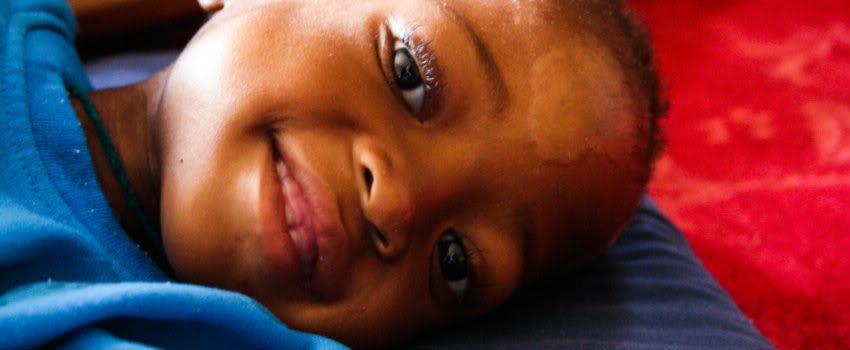
Sunday, December 1, 2013

World AIDS Day - A Wish


I remember the world before HIV became part of our vernacular. 

My first memory of HIV is the story of Ryan White, a child close to my own age, fighting discrimination and misunderstanding and creating a voice for persons, especially children, living with HIV and AIDS.  I remember outrage; I remember fear and I remember, to a lesser extent, support. 

I remember, 10 years later while working at a hospital in the US, encountering a teenage girl diagnosed with HIV and Tb.  She was the first person I met living with HIV; I now realize that she was dying from AIDS. 

Off and on throughout my healthcare career, I occasionally encountered people of all ages living with various stages of HIV and AIDS.  However, I did not fully comprehend the devastation wrought by this virus until I arrived in Sub-Saharan Africa in 2011.  There is no person here unaffected by HIV; the virus does not discriminate, though the impact is most keenly felt among the world’s destitute.

Regularly, I witness an already taxed healthcare system struggling to cope with the increased demands of HIV.  I witness insufficient resources in every sense of the word:  a scarcity of doctors and nurses; a scarcity of medication; a scarcity of medical supplies; a scarcity of clinics, health centers and hospitals; a scarcity of knowledge and power.  When I first arrived here from a place characterized by consumerism and excess, I was judgmental and I perceived apathy on the part of the health workers.  “Why aren’t they doing more?  Why don’t they care?” were my silent accusations and questions.  Having lived and worked in this resource poor setting for some time, I now realize that the apathy I perceive is more insidious; it is a global apathy towards the world’s impoverished.  HIV is exacerbating the situation.

This global indifference is felt most acutely by the infant whose mother died unnecessarily in childbirth, it is felt by the caregiver who arrives at a health facility after hours of travel only to learn that life-saving medication is not available, it is felt by the nurse or doctor who determines treatment based not on the best interest of the patient, but on the prudent use of limited supplies.  I feel it as I struggle to make sense of this dichotomous world.  I feel it every time I witness the senseless death of a child served by TTL; however, my questions and accusations have shifted, “Why aren’t we doing more?  Why don’t we care?”

There is a philosophy in Lesotho, “Motho ke motho ka batho.” This Sesotho phrase translates to, “A person is a person through other people.”  This is the language of the interconnectedness of all living things; the language of faith in humanity.  It is the ethos that brings the Basotho together to care for one another; it is a life of resilience and unity.  It is the giver of hope to those silenced by poverty and oppression, and to me. 

It is my wish for World AIDS Day, for everyday, that this belief be understood and embodied by all of humanity.  It is my wish that we all identify with and choose a life of global solidarity.  In the brave words of one of my Masotho co-workers, “My plea is that a cure for HIV/AIDS be found.  It is killing us, especially those living in developing countries.  I am realizing that one day it would be like a history that the Basotho nation once existed.”

Outreach Staff, Bo'M'e Kokonyana and Mantja
Safe home kiddos, 'M'e Mapoloko and 'M'e Maliphoofolo

Safe home and administrative staff in red for World AIDS Day


Tuesday, November 26, 2013

A Field Trip!


The caregivers for the safe home work hard!  Their work requires a combination of day shift and night shift, seven days a week.  It is a challenge to give the group time off of work because there always seem to be little ones here that need their care and support.

Last week, those of us in a more administrative role risked encounters with kaka and exhaustion to allow the Bo’M’e of the safe home to take a field trip to Beautiful Gate, an orphanage here in Lesotho.  The caregivers wanted to share a little bit about the experience with you!


Group shot in front of the Beautiful Gate building

As we got to Beautiful Gate we were welcomed and started moving places. This is when we were brought together to be told how the organization was started and its operation on a daily basis. Next, we moved around the campus and that’s where we discovered that children who stay there are divided into families being Khotso, Pula and Nala (Peace, Rain and Prosperity).  Tours like this one are very helpful to us because this where we are able to exchange ideas with those who are in the same field with us. Even once in year can be appreciated for us to pay a visit to other orphanage homes.

First and foremost, we pass our gratitude to our managing director ‘M’e Nthabeleng Lephoto who raised the point that we, safe home mothers, should visit Beautiful Gate to go and learn how it operates as far as the kids welfare is concerned.  Apart from that, we also thank our dear fellows Jennifer and Brad whom we do believe that in collaboration with our director also liked the idea.  This is why this was successful.

Furthermore, we pass our thanks to all those who played a major part in looking after the kids and other office duties while we were away.

We are so glad that you enjoyed the trip and brought back ideas to share about how to improve TTL!  I’d like our readers to note that Brad conspicuously returned to America days before the outing occurred. 

‘M’e Nthabeleng and myself have a new respect for the work of the safe home caregivers!  Our efforts to institute group naptime, workers included, were not successful. 

Monday, November 11, 2013

Village Health Workers...Our Eyes and Ears

For many Basotho, health clinics are a multiple day journey away via foot, horseback and / or motorized transport.  Village Health Workers (VHWs) are the eyes and ears for both health clinics and TTL; they are an indispensable resource within the community.  VHWs are community members specially trained by the Ministry of Health to help ensure identification of, and timely referral for, myriad childhood illnesses.


Often, trainings for VHWs are far and few between.  Recently, thanks to a donation from The Caring Network, TTL has been able to help VHWs in the Thaba Tseka and Mokhotlong districts receive additional training.  The trainings have two components:  a refresher component about identification of children suffering from malnutrition as well as new training about timely identification of common childhood illnesses, including appropriate referral and how to support the infant or child in the event of a multiple day journey to a health facility.

Though we can’t change the terrain of this beautiful ‘sky kingdom,’ we can help diminish the challenges faced by those living in the beautiful, but remote, mountain villages by ensuring that all available VHWs are empowered with knowledge to make life-saving referral decisions.  

Thank you, 'Me Malefu, for facilitating the session!

Linakaneng VHW training (Thaba Tseka district)


Monday, October 14, 2013

Toddler Time and UNICEF


The safe home is a frenzy of bustling activity these days!  We are currently caring for six active and inquisitive toddlers, as well as a few quiescent infants that pass their time observing and smiling at the whirl of motion surrounding them.  It’s not surprising that, although we serve children age birth through 5-years, most of our clients are under the age of 3.  Malnutrition is most likely to impact the 12 to 36 month age group.  This period of vulnerability is partly linked to the transition from exclusive breast or formula feeding to complimentary feeding.  Complimentary feeding begins at age 6 months, the age when breast milk or formula alone fails to meet the nutritional demands of the growing infant.  For healthy growth and development, complimentary foods need to be appropriate, accessible, affordable and adequate.  For many families in Lesotho, this seemingly simple recipe for growth and development is unattainable.

Malnutrition that is not corrected in a timely manner leads to stunting (decreased height) and impacts all aspects of child development; in acute cases it can lead to death.  In fact, malnutrition is the underlying cause of death for approximately 50% of children under the age of five; their nutritionally stressed bodies and immune system are unable to cope with the added burden of illness.  

Very recently, TTL was awarded a partnership grant from UNICEF to strengthen our nutrition and child development activities.  We are thrilled by this opportunity!  This project will enable us to tackle malnutrition, and its sequelae, in a more holistic manner.  We will be able to provide more individualized developmental and nutritional knowledge to the caregivers of the children supported by both the safe home and the outreach program.  

Khotso, Arabang and Liebo are all recovering from acute malnutrition.  When Arabang arrived to the safe home 6 months ago he was significantly behind on his developmental milestones and unable to roll over or crawl.  Now, thanks to the support of the TTL safe home caregivers, he is rolling around, crawling and standing with support!

Everyday, we witness the amazing resiliency of infants and children as they flourish when provided with adequate nutrition.  We watch children who have fallen behind on their developmental milestones surge forward as their strength and energy are renewed.

Relebohile and Tsepiso are best friends!  Relebohile is recovering from acute malnutrition while Tsepiso is recovering from micronutrient malnutrition.  Both are catching up on their milestones:  Relebohile is now actively crawling and Tsepiso pulls herself up to standing and walks with help!


Thursday, September 12, 2013

Making babies fat!


Malnutrition is a reality for 50% of infants and children in Lesotho.  Malnutrition is a broad term that encompasses both quantity and quality of food consumed.  Malnutrition can be chronic or acute and can result in growth failure, macronutrient and micronutrient deficiencies.  If left untreated, the effects of malnutrition can be irreversible.   

Around Mokhotlong camptown, TTL is known as the organization that, ‘makes babies fat.’  We are proud of our reputation and happy to see the infants and children in our care flourish.  Infants and children that are supported in the safe home spend, on average, four months receiving intensive nutritional, medical, emotional and developmental support – but we’d like to see that length of stay reduced.  Recently, we reviewed and changed the safe home diet to make it more nutritionally complete while still utilizing locally available foods and adhering to cultural preferences.  We have increased the amount of healthy fat in the diet, added more fresh fruits and vegetables, increased the amount of animal protein and created age-specific dietary plans.  Although there is nothing quite like walking into a safe home full of thriving infants and children, we are hopeful that these changes will result in a more timely reunification process.  We look forward to monitoring and evaluating these changes and hope to enjoy the fruits of our efforts!
'Me Manthati providing a little taste testing along the way
'Me Maliphoofolo scooping some avocado to add to the mashed potatoes


Lehlohonolo, affectionately nicknamed Ntate Makoenya for his chubby cheeks, likes the new diet!