Wednesday, July 2, 2014

Bianca Garcia: Impressions of Basotho culture

For two months, TTL hosted Bianca Garcia, a graduate student from the Notre Dame Eck Institute for Global Health, as she conducted research in rural Lesotho. This is the last of a 3-part blog series of Bianca's research and reflections.

Throughout my time surveying, I have heard a lot of about the health-related and economic ordeals that many Basotho caregivers face. I am always impressed by their resilience and their kind, welcoming demeanor in the face of challenges.

I spoke to many bo-‘m’e (women caregivers), who did not have a job or other form of income, that were supporting 6+ children, taking care of cattle, and maintaining fields or gardens. This work has certainly taken a toll on their health. These women are so strong and, as many have recounted on this blog, are definitely the backbone of the Basotho society. The duty of ensuring the health and livelihood of all its members usually falls on these women. 

The bo-‘m’e would welcome me into their home and offer me a chair (even if they only had one) and would listen and respond tentatively to my survey. The stories they had to tell about their daily challenges are heart wrenching as well as inspiring. Sometimes I was emotionally overwhelmed by the situations that these individuals faced, but I had to remind myself to bounce back. I would be doing these individuals a disservice by getting not completing my work. I want to tell the story of these caregivers, usually women and often grandmothers, and hopefully see future interventions that improve their health and economic standing as well as the health of the children they raise. 

I am amazed and grateful to these women for agreeing to take time out of their hectic schedule to talk to a complete stranger and share their knowledge and kindness. I only hope that one day I can repay them.

I like to think that this experience has humbled me some and helped me remember not to complain as much about my daily trivialities. While I joke about timeliness, bumpy roads, and long walking distances, these are just everyday things the Basotho caregivers do not even fret about.

I want to thank the Basotho people, specifically the caregivers and children, for their time, stories, willingness to help, as well as their patience and acceptance of me and my research. Without their enthusiastic and willing participation my research would not be possible. Thanks also to the TTL staff for their assistance in coordinating my surveys and helping my research to progress as much as it did in such a short period of time. Kea leboha!

My research will not change Lesotho immediately, or even substantially, but I hope that in some small way I can contribute to change in the lives of these strong Basotho caregivers, just as they have had a profound impact on me.

As we say in Lesotho: Khotso. Pula. Nala.
Bianca

Tuesday, July 1, 2014

Five tips for research in Lesotho

For two months, TTL hosted Bianca Garcia, a graduate student from the Notre Dame Eck Institute for Global Health, as she conducted research in rural Lesotho. This is the second of a 3-part blog series of Bianca's research and reflections.


Lesson #1: Time is not always of the essence

While this does not always apply just to research, here in Lesotho things move a little bit slower. You should be willing to wait a little while and have plenty of good reading material. Whether it was recruiting with the TTL Outreach team, waiting for the driver in the morning to take us to conduct surveys, or simply just ordering pizza from Mokhotlong Hotel, things just take a bit longer.

Although frustrating at times, it taught me to be more patient and, ironically, to better manage my time, doing other things while waiting. Also maybe you just tell your driver to arrive thirty minutes earlier than intended or order that pizza at 4:30pm instead of 6pm. 

Lesson #2: Lesotho has some amazing off-road drivers (and I am not being sarcastic)

They are fantastic. Often I would look ahead to see a steep hillside complete with jagged rocks and a stream flowing through it and I would get ready to disembark so I could hoof it the rest of the way. I was always surprised when the driver would put it in gear and we would begin the slow and steady crawl up the hillside. All the while the driver would keep a steady hand regardless of the bumpiness or incline of the road. 


Lesson #3: Reliable walking shoes are essential


Surveying caregivers in the villages of Mokhotlong district requires a lot of walking. If you do not have a contact number or other way to reach someone by word of mouth, then you will be traveling to their village and hope they have not gone to the fields or into town yet that day.

Also, despite my comment earlier some of the roads are all but impassable except for on foot.

Lesson #4: Make friends along the way

It has been a great experience getting to meet so many wonderful people. The caregivers I have surveyed have inspired me. I returned to the TTL campus each evening with stories – some difficult, but many more that I will keep as fun, fond memories of my time here.

Lesson #5: Play with babies

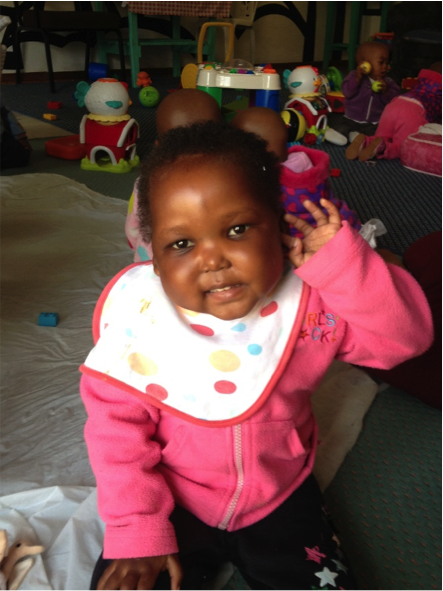
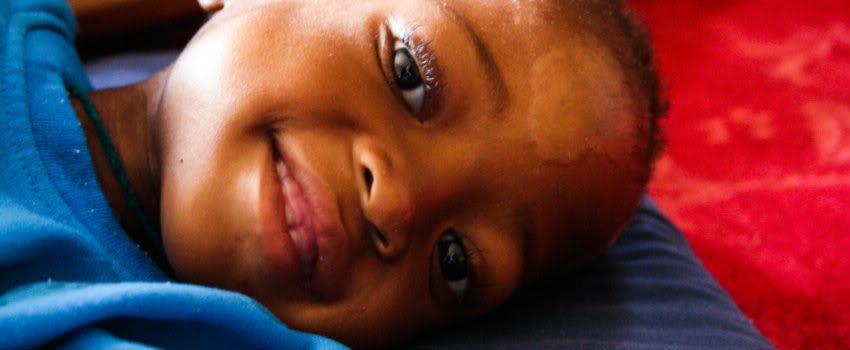
A great thing about staying at the Touching Tiny Lives campus is getting to spend time with the adorable and fun-loving kids of the Safe Home. These children have continuously put a smile on my face and have brought me much joy, and they have pushed me to work hard and put out quality results from my research.

Monday, June 30, 2014

Researching caregiver health in Lesotho

For two months, TTL hosted Bianca Garcia, a graduate student from the Notre Dame Eck Institute for Global Health, as she conducted research in rural Lesotho. This is the first of a 3-part blog series of Bianca's research and reflections. 

When you hear the word 'research,' your mind probably automatically jumps to an image of a woman or man in white lab coat standing over a big beaker of liquid.


Maybe something like this>>


When you hear 'qualitative research' or 'surveys' you probably think of the pesky emails you receive from this company or that company about the quality of their services. However, you probably do not envision a Master’s student and her translator trekking across miles…ahem I mean kilometers of mountainous Lesotho searching for their next survey participant.  This has certainly not been like any type of research that I have ever experienced before.

The goal of my research this summer has been to see how the health and economic status of a caregiver (either maternal or non-maternal) affects the health and development of the child they care for. Specifically, I have been conducting thirty-minute surveys of caregivers in Mokhotlong and the surrounding areas as well as collecting height and weight measurements of their children. I am now in the tail end of my research and beginning my data analysis, but there have been many interesting and fun experiences along the way.


Before beginning my research here in Mokhotlong I was not sure what to expect entirely.  I knew I would learn many lessons. I knew I would find great joy in hearing people’s stories, in experiencing a new culture, making new friendships, and in trying new cuisine. Also, I knew I would face challenges like encountering extreme poverty and sickness. However, it has been so much more than that. The following blog posts will show you what I mean.

Stay tuned!

Thursday, June 26, 2014

TB in children...more than just a diagnosis


At TTL, we spend a lot of time focusing on the two crises we deal with on a daily basis: HIV/AIDS and acute malnutrition. Yet another common illness that can severely impact child health, particularly if they already suffer from one or both of the other conditions, is Tuberculosis, or TB.

Lesotho has the fourth-highest TB infection rate in the world according to the World Health Organization, in part because over 75% of the population lives in rural and difficult-to-access areas. The steep mountains and harsh weather pose significant challenges for Basotho trying to access basic health care services. People can walk up to five hours over harsh terrain just to reach the nearest medical facilities, and many patients only present to the hospital when their physical condition has deteriorated to late stages of illness. In a country that also has the third-highest HIV/AIDS infection rate worldwide, the struggle to access critical health care can have a very high cost.

TB in Lesotho is associated with HIV and AIDS co-infection, difficulty with treatment adherence, social and economic strain, limited access to treatment, and the constant threat of resistance to TB medications. For people living with HIV/AIDS, their compromised immune systems make them increasingly susceptible to the effects of TB. Government hospitals and numerous other organizations work hard to manage the high numbers of TB clients, but the scarcity of space, human resources, and supplies makes providing care an ongoing challenge.

Hospitals and clinics are not alone in this struggle - TTL also faces difficulties with infection control and maintaining the health of each child who comes into our care, especially at the Safe Home. We work with vulnerable children under five who battle acute malnutrition, HIV, overcrowding, and poverty, all of which are closely associated with TB and lower treatment success rates.

The World Health Organization reports that childhood malnutrition puts kids at greater risk for TB and exacerbates the severity of TB if it is contracted. High numbers of childhood TB are especially frustrating when you consider that most TB deaths and adverse effects are preventable with proper health care services for diagnosis and quick initiation on treatment. A lack of knowledge about infection control and when to seek medical attention is likely a contributing factor to children being exposed to other TB-positive individuals in the family and community.

The issues of space and infection control are very salient for TTL. We want to provide care for malnourished children when they are referred to the Safe Home, but do not want to expose them to a child who may be TB-positive. TTL works directly with clinics, such as the Baylor College of Medicine Children’s Clinic in Mokhotlong, to ensure that vulnerable children under-five receive prompt medical attention when presenting symptoms of respiratory illness. TTL also works closely with the Mokhotlong Government Hospital, often moving children to and from each service when it’s most appropriate. The hospital has both a pediatric ward and a designated TB ward, but the ongoing patient demands often result in overcrowding and difficulty implementing proper infection control procedures.

While we rely on our partners at the Baylor Clinic and Mokhotlong Hospital for testing and treatment, test results are rarely immediate and the child remains in need of treatment for malnourishment. Not wanting to turn children away from receiving care, TTL strives to adhere to good infection control practices in a resource-strained environment. We are committed to developing and strengthening our infection control policies and practices through the support of our local and international partners. Improving our TB infection control strategies will help ensure that we provide the best level of care possible for each tiny life. 


Wednesday, June 18, 2014

"In Resource-Poor Countries..."

Below is a guest post from Georgetown medical student Adam Knudson, who visited Mokhotlong for several weeks in April. Adam is studying internal medicine and joined the Outreach staff on site visits as well as volunteered at the Mokhotlong Government Hospital, where he observed many effects of the HIV/AIDS pandemic firsthand.

The Ntate shuffled into the outpatient clinic with the gait of a weathered octogenarian. From his physical appearance, I would have guessed him to be in his mid-fifties, but the birthdate on his Bukana said he was thirty-five. His stick-like arms and legs poked out from underneath his many layers of clothes and traditional Basotho blankets. With sunken cheeks, sunken eyes, and sunken temples, every contour of his skull was visible on his gaunt face, which was now little more than skin draped loosely over bone. Every rib was visible in his birdcage chest, and the concavity of his abdomen made me question how any internal organs could possibly fit inside. 

The Ntate’s belt measured his dramatic weight loss. A worn hole in his belt from when he weighed his heaviest was now eight holes away from where the belt was currently buckled. Still worse, having the belt buckled as tightly as possible in self-made notches wasn’t enough to prevent Ntate’s pants from falling off his hip bones. He tucked his thick wool sweater into his tightly secured jeans in order to hold them up. 

Like several patients I encountered at Mokhotlong Government Hospital during my month as a TTL medical volunteer, Ntate was suffering from AIDS wasting syndrome. While AIDS wasting syndrome is typically only seen in end-of-life scenarios in the US, sadly, it is not an uncommon way for adult patients to present here when they are first diagnosed with HIV/AIDS. In Lesotho, the HIV prevalence rate is an astounding 23.1%, second highest in the world according to World Health Organization data from 2012. Thanks to the efforts of Touching Tiny Lives, Baylor International Pediatric AIDS Initiative, Elizabeth Glaser Pediatric AIDS Foundation, the Millennium Challenge Corporation, and other global health initiatives, Lesotho’s HIV prevalence rate is actually down from nearly 30% a decade ago.

Despite the progress, many challenges remain. Limited resources create hurdles. Mokhotlong Government Hospital, which acts as a referral center for clinics in all of Mokhotlong District, has been without a functioning CD4 count machine for the better part of the past six months. It’s awfully difficult to appropriately treat HIV/AIDS patients without knowing whether their current treatment regimens are effective. Instead of using CD4 cell counts to stay ahead of the disease process, healthcare workers here are forced to resort to monitoring physical signs and symptoms and play catch-up when the disease gets out of hand. The few patients with the economic means to travel are told to go to hospitals in other districts to get their CD4 counts checked.

Social and cultural factors also pose barriers to preventative measures. Some of these issues are highlighted by the wide gender disparity in HIV testing rates. According to old UNAIDS data from 2009, 68.8% of females in the country had been tested for HIV at some point in their life, compared with only 39.3% for males. From my brief time in Lesotho, it seems that gender disparity hasn’t changed much. Female empowerment campaigns and Preventing Mother-to-Child Transmission (PMTCT) efforts likely contribute to the higher female testing rate relative to males. So too, I suspect, does a culture of male denial. Reading through a TTL baby’s intake packet and noticing that the baby’s mother was HIV-positive while the father’s status was “unknown and refused testing” was one of the more frustrating moments during my month at TTL. The silver lining was an HIV-negative baby, one of many PMTCT success stories.

As a soon-to-be resident in internal medicine, I am thankful for my opportunity to spend a month in Lesotho with TTL and Mokhotolong Government Hospital. My experiences here have been eye-opening, and my time in Mokhotlong allows me now to put faces to the phrases “in resource-poor countries…” and “in Sub-Saharan Africa…” from medical literature and medical school lectures. I leave Lesotho with a re-affirmed passion for global health. Despite the challenges and frustrations, I am optimistic that the successes and progress in Lesotho will continue, and I hope to contribute to that progress in the future.